 English
 русский
Industry News
Home / News / Industry News / Valve Manual Mechanism Turbine Head: The Gearbox That Turns One Handwheel Into a Valve That Opens

2026-10-16
A 24-inch gate valve will not open with a quarter turn. The stem has to rotate dozens of times to move the disc from seated to fully open, and the torque needed exceeds what a person can apply through a direct handle. A valve manual mechanism turbine head mounts on the valve and multiplies the handwheel force through a worm gear set. One operator turns the wheel. The gearbox turns the stem. The valve moves.
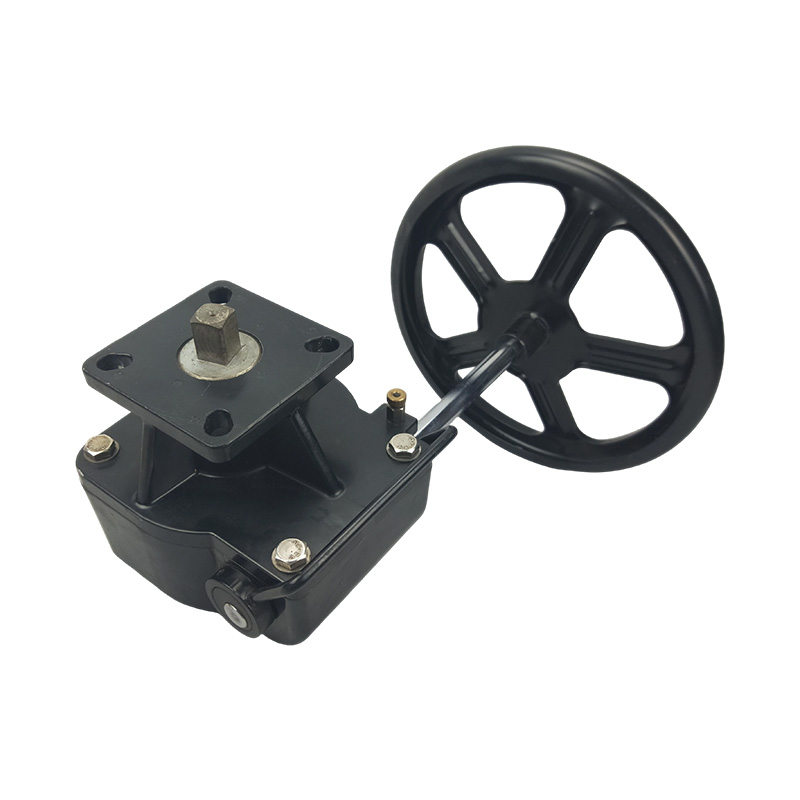
Inside the housing, a hardened steel worm drives a bronze worm wheel. The ratio runs from 20:1 to 80:1 depending on the valve size. Each turn of the handwheel advances the valve stem a fraction of a turn. A valve that would need two people on a long lever becomes a one-person job.
The worm and the wheel are the wear pair. The worm is ground and hardened. The wheel is bronze, sometimes with a bronze wear ring where it contacts the worm. Bronze on steel gives a low-friction interface that resists galling through thousands of cycles. The gear set is the reason the operator can move the valve at all.
At the higher ratios, the worm gear resists back-driving. The operator stops turning and the valve stays where it is. No brake and no lock. The geometry does the work. That matters on a valve that holds against line pressure. A gear set that back-drives lets the valve creep open or closed on its own.
The self-locking property depends on the lead angle of the worm and the friction between the worm and the wheel. The manufacturer selects the ratio and the materials to get the holding behavior the application needs.
The housing is ductile iron or cast steel. It holds the gear set in alignment and keeps the water, the dust, and the process fluid away from the gears. The bores for the worm and the wheel are machined in one setup so the alignment is right.
The input shaft seal keeps the rain and the dust out at the handwheel end. The output seal keeps the grease in and the contaminants out around the valve stem. A gearbox that leaks grease onto the valve bonnet is a gearbox the maintenance crew notices. The housing is grease-filled for life on most models, with a fitting for the maintenance team to refresh the lubricant.
A pointer and a graduated dial sit on top of the housing and move with the stem. The indicator is calibrated so the pointer matches the actual valve position. The operator reads the dial instead of guessing.
The mechanical end stops prevent over-travel. When the valve reaches fully open or fully closed, the stops contact inside the gearbox and stop the rotation. The stops protect the valve seats and the stem threads from an operator who keeps turning. The factory sets the stops during assembly and seals the adjustment.
Here is what a turbine head has to deliver:
Water treatment plants use the turbine head on the large gate valves that isolate the filters and the tanks. One operator makes the rounds and turns handwheels that would otherwise need portable actuators.
Pipeline block valves sit in remote locations without power. The turbine head lets the operator open and close the valve by hand. A buried valve uses a handwheel adapter that extends to grade.
Emergency shutdown valves have to close reliably. The turbine head holds the valve open under normal conditions and allows closure in seconds.
The gear wears and the valve drifts. The end stops were set wrong and the valve over-travels. The seals leak and the water gets into the grease. Each one is a factory decision. The gearbox that holds its settings and keeps the water out is the one the maintenance crew does not think about.
Copyright © Zhejiang Xiafeng Precision Die Casting Co., Ltd.
China Air Operated Double Diaphragm Pump
