 English
 русский
Industry News
Home / News / Industry News / Aluminum Alloy Diaphragm Pump Casting Manufacturer: Porosity Is the Enemy

2026-07-03
A diaphragm pump moves slurries, sludges, and chemicals that would destroy a centrifugal pump. The diaphragms flex. The check valves open and close. The liquid never touches the shaft. But the pump body—the main housing—is a casting. And a bad casting turns a reliable pump design into a leaker that cracks under pressure or corrodes from the inside out. An aluminum alloy diaphragm pump casting manufacturer that controls porosity and dimensional accuracy produces castings that hold pressure and last for years.
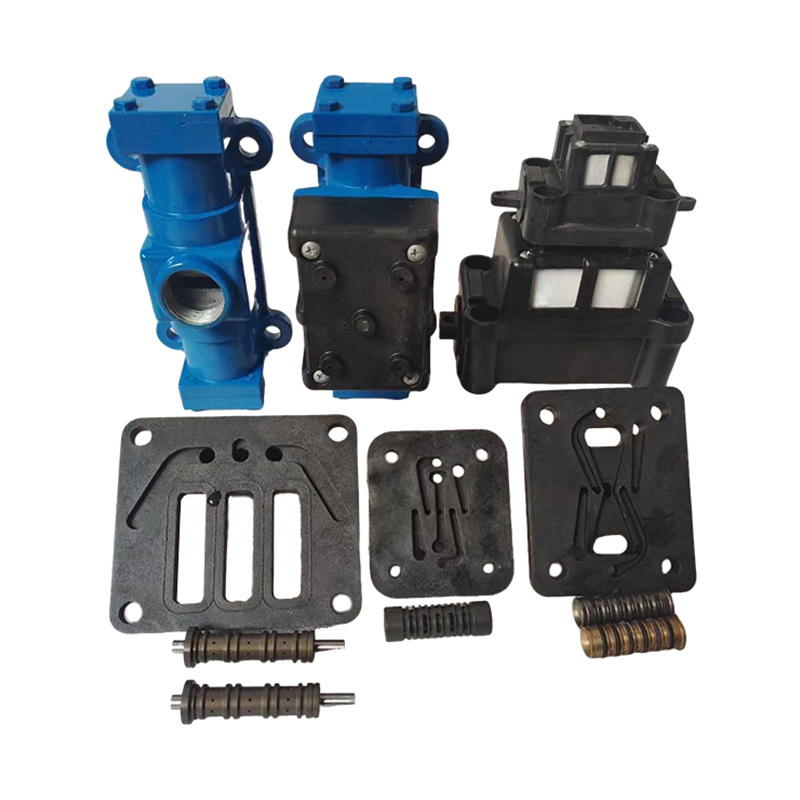
The alloy is the first decision. A356 aluminum is a common choice for pump castings. It flows well into complex moulds, welds easily if repairs are needed, and handles moderate chemical exposure. For acidic or caustic fluids, the manufacturer may recommend a conversion coating or specify a higher-purity alloy. An aluminum alloy diaphragm pump casting manufacturer should ask what fluid the pump will see. Aluminum resists some chemicals and reacts violently with others. The alloy choice flows from the application, not a default specification sheet.
The microstructure of the casting matters as much as the alloy grade. Proper grain refinement during solidification yields a denser casting with better pressure tightness. A manufacturer that controls the cooling rate and uses chills in the mould where sections are thick gets a finer grain structure and fewer internal voids.
Diaphragm pump housings hold pressure, often up to 8 or 10 bar. Porosity—tiny gas bubbles trapped in the casting—creates leak paths. A casting that holds fluid at low pressure weeps at operating pressure. An aluminum alloy diaphragm pump casting manufacturer addresses porosity at several stages: degassing the melt before pouring, designing the gating system so metal flows smoothly without turbulence, and positioning risers to feed the solidifying casting and prevent shrinkage cavities.
The real check is a pressure test. Every pump casting should be tested, not just a sample from each batch. The manufacturer seals the ports and pressurizes the housing, usually with air under water or with a tracer gas. A casting that bubbles or loses pressure gets scrapped or impregnated. Impregnation with a resin sealant can rescue a casting with minor porosity, but it adds cost and is a second-outstanding fix. A casting that was poured correctly is dense from the start.
Here is what to ask about porosity control:
Pump castings need machining surfaces—flange faces, diaphragm chambers, valve seats. The casting must hold dimensional tolerances across the parting line and through internal cavities. Core shift during pouring throws the internal passages out of alignment. An aluminum alloy diaphragm pump casting manufacturer that uses hardened core boxes, regular tooling inspection, and a coordinate measuring machine on first-article castings catches shift before it propagates through a production run.
Machining stock should be uniform. Too much stock wastes machining time and cuts through the dense surface skin, exposing subsurface porosity. Too little stock risks leaving an unmachined surface on a critical sealing face. A well-made casting has consistent wall thickness, with the machining allowance specified on the drawing and verified on the sample.
Cut a sample casting into sections. The internal walls should be free of visible shrinkage voids and gas bubbles. Check the wall thickness at multiple points—variation should stay within the drawing tolerance. Pressure-test a machined casting to the rated pressure and hold it. Check for leaks at the flange faces and around cored holes. Tap the casting with a small hammer. A clear ring indicates a sound structure. A dull thud suggests internal cracking or a major void.
An aluminum alloy diaphragm pump casting manufacturer that offers heat treatment, surface finishing, and machining under one roof reduces the number of hands the casting passes through. Each transfer between suppliers adds lead time and creates a gap in quality responsibility. A manufacturer that pours, heat-treats, and machines the casting can trace a leak found at final test directly back to the pour, the heat treat cycle, or the machining setup. Traceability shortens problem-solving from weeks to hours. Ask whether the manufacturer machines in-house or sends castings out. The answer reveals how much of the process they actually control.
Copyright © Zhejiang Xiafeng Precision Die Casting Co., Ltd.
China Air Operated Double Diaphragm Pump
