 English
 русский
Industry News
Home / News / Industry News / Valve Cover End Cap: New Sealing Standard Emerges for Industrial Systems

2026-07-31
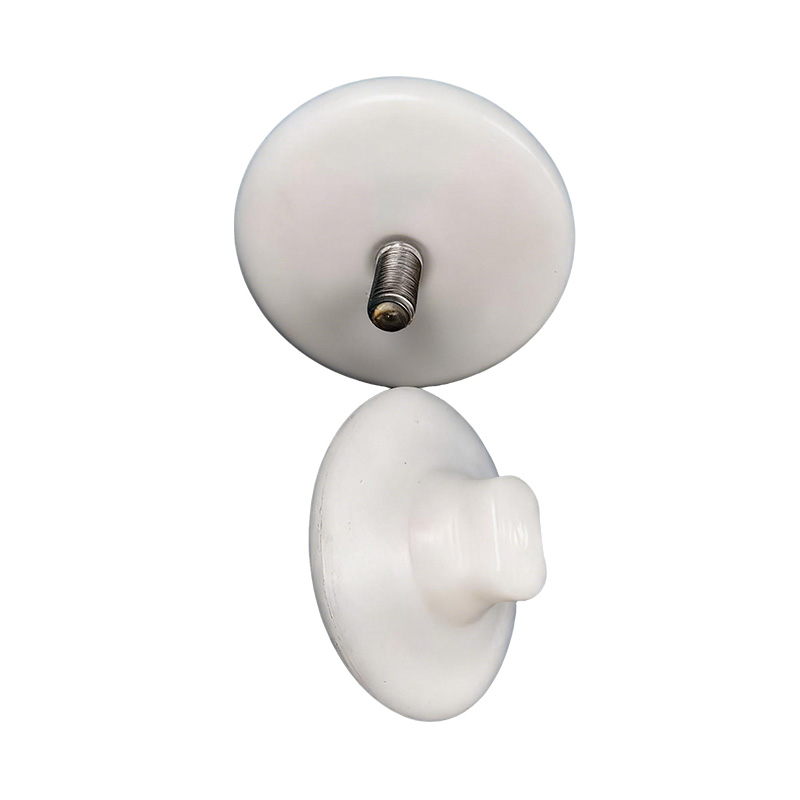
In response to growing demands for leak-proof performance in high-pressure fluid and gas conveyance, the valve cover end cap has recently become a focal point of engineering upgrades across multiple process industries. This component, once treated as a simple closure accessory, is now being redesigned with advanced materials and precision-machined sealing faces to reduce fugitive emissions and extend maintenance intervals. Recent field trials indicate that modern end cap designs can cut unplanned downtime by nearly 30 percent, while also simplifying visual inspection routines for plant crews.
The shift from traditional cast-iron caps to duplex stainless steel and reinforced polymer composites marks a clear trend. Newer alloys offer predominant resistance to thermal cycling and mildly corrosive media, while composite versions reduce overall assembly weight and less galvanic corrosion with mating flanges. Manufacturers have also started applying diamond-like carbon coatings to thread roots and sealing lips—a move that lowers friction during torquing and prevents galling, even after repeated removals. These material upgrades directly address several long-standing pain points: premature thread wear, gradual gasket creep, surface pitting from chemical exposure, and dimensional instability under fluctuating temperatures.
Contemporary valve cover end caps incorporate multiple safety-oriented details that set them apart from older variants. Key improvements include:
Proper mounting of a valve cover end cap demands more than just a standard wrench. Industry engineers now recommend a multi-stage tightening sequence: first a hand-tight seating, then a low-torque pass at 40 percent of final value, followed by a final pass at 100 percent, with a 10-minute dwell period before re-checking. This sequence accommodates gasket relaxation and produces more even clamp load across the sealing face. Equally important is the use of calibrated torque tools—preferably with angle-monitoring capability—because under-torquing leads to weeping joints, while over-torquing can distort the cap flange and cause bolt stretching. Additional outstanding practices include: cleaning threads before each installation, applying anti-seize only to non-sealing zones, verifying gasket condition visually, and recording final torque values in maintenance logs for traceability.
Replacement intervals for the valve cover end cap are no longer fixed by calendar months but are now condition-based, guided by vibration signatures and ultrasonic leak detectors. Field data suggest that a well-maintained cap can last upwards of 8,000 operating hours in moderate service, compared to 5,000 hours for older designs. To improve this lifespan, operators are advised to adopt several routine measures: clean threads with a soft brass brush at every filter change; apply a thin layer of anti-seize compound (only on non-sealing thread sections); store spare caps in climate-controlled cabinets to prevent rubber seal hardening; rotate inventory on a first-in-first-out basis; and perform visual wear-indicator checks at each shift turnover.
Looking ahead, the next generation of valve cover end caps is likely to incorporate passive wireless sensors that transmit temperature and strain data directly to handheld diagnostic units. Prototypes have already shown that embedded thin-film strain gauges can detect bolt loosening in real time, alerting operators before leakage begins. While these smart caps remain several quarters away from broad commercialization, early adopters are retrofitting existing caps with clip-on sensing rings as an interim solution. This gradual digital transition, paired with the mechanical improvements already in place, points toward a future where the humble end cap evolves from a passive plug into an active sentinel for system integrity. For now, however, the immediate wins—lower emissions, easier servicing, longer component life, reduced operator exposure to hazardous fluids, and more predictable replacement scheduling—are already convincing more facilities to review their current closure specifications and upgrade accordingly.
Copyright © Zhejiang Xiafeng Precision Die Casting Co., Ltd.
China Air Operated Double Diaphragm Pump
