 English
 русский
Industry News

Diaphragm Pump Castings Manufacturer: The Metal That Moves the Fluid
2026-08-07
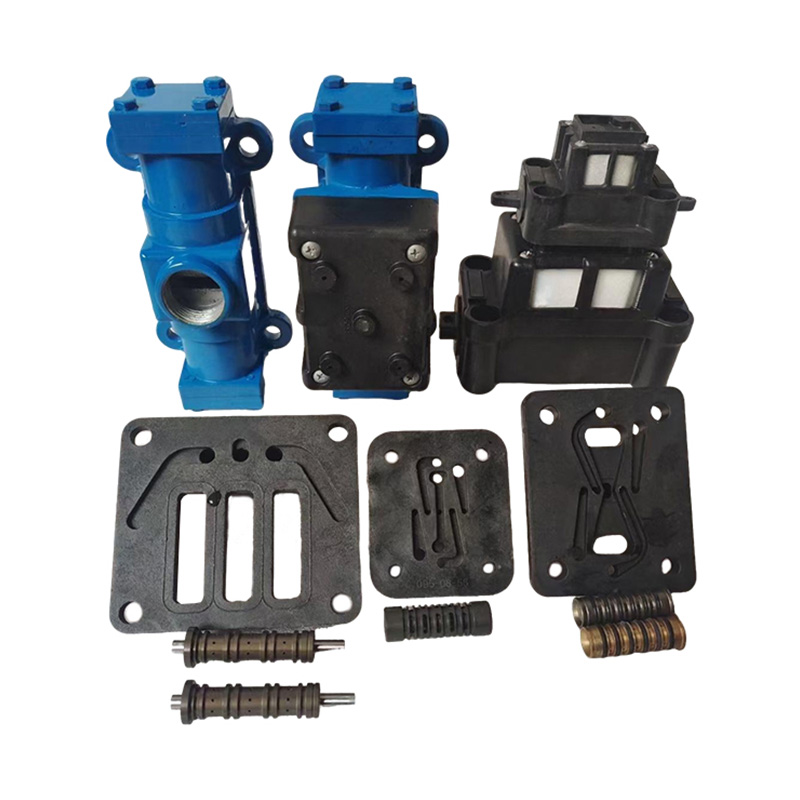
A diaphragm pump does not touch the fluid with gears, pistons, or seals. The diaphragm flexes. The fluid moves. The pump body just sits there, cradling the chambers and holding the pressure. But the body is where a cheap pump reveals itself. A casting with internal porosity leaks under pressure. A casting with the wrong alloy corrodes in chemical service. A casting that is out of tolerance misaligns the diaphragms and wears them prematurely. A diaphragm pump castings manufacturer pours the aluminum, stainless steel, or ductile iron that becomes the pump housing, the manifolds, and the air motor body. The machining comes later. The casting quality is set in the foundry and cannot be fixed downstream.
The Alloys That Match the Application
Diaphragm pumps move chemicals, slurries, food products, and solvents. The metal that handles hydrochloric acid is not the metal that handles tomato paste. A diaphragm pump castings manufacturer pours the alloy matched to the service environment. Aluminum with controlled silicon content for general industrial use. 316 stainless steel for corrosive chemical transfer. Ductile iron for abrasive slurries where impact resistance matters more than corrosion resistance.
Aluminum pump castings are the volume product. They are light, they machine fast, and they handle most neutral fluids without issues. The aluminum alloy needs to be a casting-grade formulation, typically A356 or an equivalent, that flows well into thin-walled sections and holds pressure without leaking. A diaphragm pump castings manufacturer that controls the melt chemistry and degassing process produces aluminum castings that pass pressure testing on the first try.
Stainless steel castings serve the chemical and food industries. The alloy is typically 316 or 316L for corrosion resistance across a wide range of chemicals. Stainless pours at a higher temperature than aluminum and shrinks more during solidification. A diaphragm pump castings manufacturer with experience in stainless knows how to gate and riser the mold to prevent shrinkage cavities in the critical sealing surfaces where the diaphragm seats against the body.
Ductile iron castings handle abrasive slurries and thick, viscous fluids. The graphite structure in ductile iron gives it impact resistance that gray iron lacks. A diaphragm pump castings manufacturer pouring ductile iron for pump bodies uses inoculation and careful cooling to achieve the correct nodule count and distribution. A ductile iron casting that is too hard machines poorly. One that is too soft wears fast in slurry service.
The Porosity Problem Nobody Sees Until Pressure Testing
A casting that looks superb on the outside can hide porosity on the inside. The first time the pump is pressurized, air or fluid finds the void. The part fails. A diaphragm pump castings manufacturer prevents porosity by controlling the metal temperature at pouring, designing the gating system to feed the casting as it solidifies, and degassing the melt before pouring.
Aluminum is especially prone to hydrogen porosity. Hydrogen dissolves in molten aluminum and comes out of solution as the metal solidifies, forming tiny gas pockets. A diaphragm pump castings manufacturer degasses aluminum melts with inert gas purging or tablet degassers and verifies the melt quality with a reduced pressure test before pouring production castings.
Shrinkage porosity forms when the casting solidifies unevenly and isolated pools of liquid metal are cut off from the feed metal. A diaphragm pump castings manufacturer places risers strategically to feed thick sections and uses solidification simulation software to predict where shrinkage will occur. The risers get cut off during finishing, but the casting underneath stays sound.
Here is what a pump casting needs to survive the foundry and the field:
- Alloy chemistry verified per heat with spectrometry documentation
- Degassed melt for aluminum, controlled pouring for stainless and iron
- Gating and riser design that feeds solidification and prevents internal voids
- Pressure testing of every casting or batch samples per customer specification
The Surfaces That Seal and the Tolerances That Fit
A pump body casting has machined surfaces where the diaphragms seat, where the manifolds bolt on, and where the air valve mounts. The casting needs enough stock in these areas to clean up during machining without requiring excessive material removal that drives up cost. A diaphragm pump castings manufacturer holds the casting dimensions to tolerances that allow consistent machining setups.
Surface finish in the as-cast condition affects what happens inside the pump. A rough surface in the fluid chamber creates turbulence and traps product. A diaphragm pump castings manufacturer that controls mold coating and pouring temperature produces castings with a surface finish appropriate for the application. Food-grade pumps need smoother internal surfaces for cleanability. Chemical pumps need surfaces free of folds and cold shuts where corrosive fluids can concentrate.
The parting line where the mold halves meet leaves a witness line on the casting. A diaphragm pump castings manufacturer finishes the parting line flush so it does not interfere with gasket sealing or create a stress riser. A raised parting line on a sealing surface is a leak path waiting to happen.
What Separates a Foundry That Knows Pumps
Pump castings are not simple shapes. They have internal chambers, cored passageways, and thin-walled sections that transition into thick flanges. A diaphragm pump castings manufacturer that understands the casting geometry of pump components designs the tooling and the process around the specific challenges of these parts.
Coring the internal chambers requires sand cores that hold their shape during metal pouring and collapse cleanly during shakeout. A diaphragm pump castings manufacturer that produces its own cores controls the sand mixture, the core box condition, and the core handling to prevent broken cores that cause casting scrap. Cores that shift during pouring create wall thickness variations that affect pump performance.
Machining allowance has to be consistent. A diaphragm pump castings manufacturer that delivers castings with uniform stock for machining reduces setup time at the machine shop. Castings that require the machinist to adjust the setup for each piece because the stock varies slow down production and increase cost.
A diaphragm pump casting leaves the foundry looking rough and unfinished. It will be machined, polished, assembled, and pressure tested before it becomes a pump. But the integrity of the casting, the alloy chemistry, the internal soundness, and the dimensional accuracy are all set in the foundry. Choose a diaphragm pump castings manufacturer that controls the melt, designs the gating for the geometry, and verifies quality before the casting ships. The pump will hold pressure and resist corrosion because the metal it is made from does. That is the foundry's contribution to every diaphragm pump in service.
CATEGORY
Message Feedback
Copyright © Zhejiang Xiafeng Precision Die Casting Co., Ltd.
China Air Operated Double Diaphragm Pump
