 English
 русский
Industry News
Home / News / Industry News / Aluminium Die Casting Mold: The Tooling That Shapes Molten Metal Under Pressure

2026-08-28
Molten aluminum enters a steel mold at high speed. The mold closes under tons of clamping force. The metal solidifies in seconds. The mold opens. A robot extracts a near-finished part. An aluminium die casting mold produces brackets, housings, engine components, and structural parts by forcing liquid aluminum into a hardened steel cavity. The mold is not a container. It is a precision tool that forms complex shapes with thin walls, at cycle times measured in seconds, for production runs that stretch into the hundreds of thousands. For automotive, aerospace, and industrial manufacturers, the mold is where the part is born.
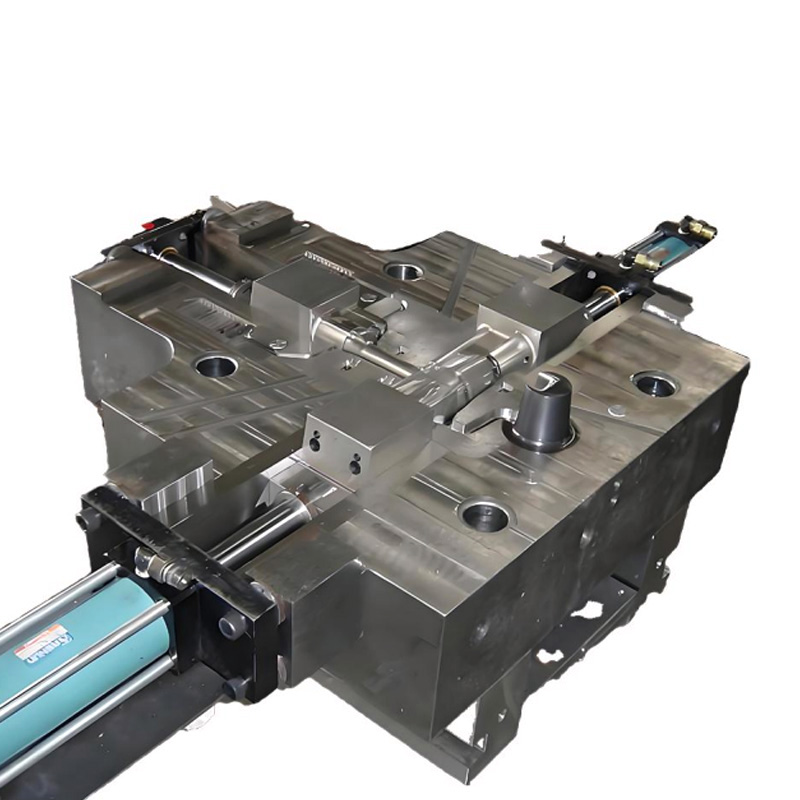
Molten aluminum hits the cavity surface at high velocity. The steel has to resist heat checking, erosion, and soldering. An aluminium die casting mold uses hot-work tool steel, typically H13 or DIN 1.2344, hardened to a range of 46 to 50 HRC. This steel holds its hardness at elevated temperatures and resists thermal fatigue.
Heat checking is the mold's life limit. Every shot heats the cavity surface. The release agent cools it. Repeated thermal cycling produces a network of fine surface cracks. An aluminium die casting mold manufacturer controls the steel microstructure through proper heat treatment and stress relieving. A mold with properly treated H13 runs hundreds of thousands of shots before heat checking appears on the cast parts.
A surface coating extends life further. Nitriding or PVD coatings create a hard, chemically inert surface layer. The coating resists soldering, where aluminum sticks to the steel and builds up on the cavity wall. An aluminium die casting mold with a nitrided cavity produces cleaner parts and runs longer between cleaning cycles.
The runner system delivers aluminum into the cavity. The gate is the entry point where the runner meets the part. An aluminium die casting mold manufacturer designs the gate location and size so the metal fills the cavity before it solidifies. A gate that is too small causes premature freezing and short shots. A gate that is too large leaves a thick remnant requiring extra trimming.
Venting lets air escape ahead of the metal front. Trapped air compresses and heats, causing porosity in the finished part. An aluminium die casting mold with vent channels and overflow pockets captures the gas and allows clean metal to fill the cavity. Vacuum systems pull air out before injection for near-zero porosity in critical structural parts.
Cooling channels drilled through the mold control the die temperature. Consistent temperature means consistent solidification and dimensional stability. An aluminium die casting mold manufacturer designs cooling circuits that follow the cavity contour. Conformal cooling, where channels are 3D-printed into complex shapes, pulls heat from areas straight drilled lines miss.
The part shrinks onto the core as it cools. Draft angles let it release. An aluminium die casting mold with proper draft prevents sticking. Ejector pins push the part off the core, positioned on ribs, bosses, and non-appearance surfaces. Pin marks on a sealing face or a bearing surface are not acceptable.
Slides and cores form undercuts and internal passages. A hydraulic or mechanical slide pulls the core out of the part before ejection. An aluminium die casting mold with properly timed slides produces complex geometries without secondary machining. The slide mechanism has to move freely under high temperatures and resist galling from repeated cycling.
Here is what a die casting mold needs for production:
Automotive manufacturing uses aluminium die casting molds for engine blocks, transmission housings, brackets, and structural components. The mold runs in a cell with the casting machine, trim press, and robot. The cycle repeats every 30 to 60 seconds. The parts ship to machining lines.
Consumer products and electronics use aluminium die casting for laptop cases, power tool housings, and small appliance bodies. The mold produces near-net-shape parts that need minimal finishing before assembly.
Porosity in the cast part from trapped gas. An aluminium die casting mold with proper venting and a vacuum system produces parts with minimal porosity. Solder buildup on the cavity surface from aluminum adhesion. A nitrided or coated cavity resists soldering. Ejector pins bend or break because the part stuck. Proper draft and a polished cavity surface prevent sticking.
An aluminium die casting mold is a production asset that works under heat, pressure, and erosion. The mold fills with molten aluminum every 30 seconds, day and night. Choose a manufacturer that selects the right steel, designs the fill and cooling, and builds the ejection system for reliable cycling. The parts will come out clean and on spec. That is the output that pays for the mold.
Copyright © Zhejiang Xiafeng Precision Die Casting Co., Ltd.
China Air Operated Double Diaphragm Pump
