 English
 русский
Industry News
Home / News / Industry News / Diaphragm Pump Castings Reports Improved Durability In Valve Applications

2026-05-29
Diaphragm Pump Castings and Automotive Aluminum Parts are being increasingly evaluated together in valve-related assemblies where structural consistency and fluid control reliability need to stay aligned. In recent production observations, Diaphragm Pump Castings Reports Improved Durability In Valve Applications has been associated with refinements in casting control, while Automotive Aluminum Parts continue to support structural integration in surrounding housing systems.
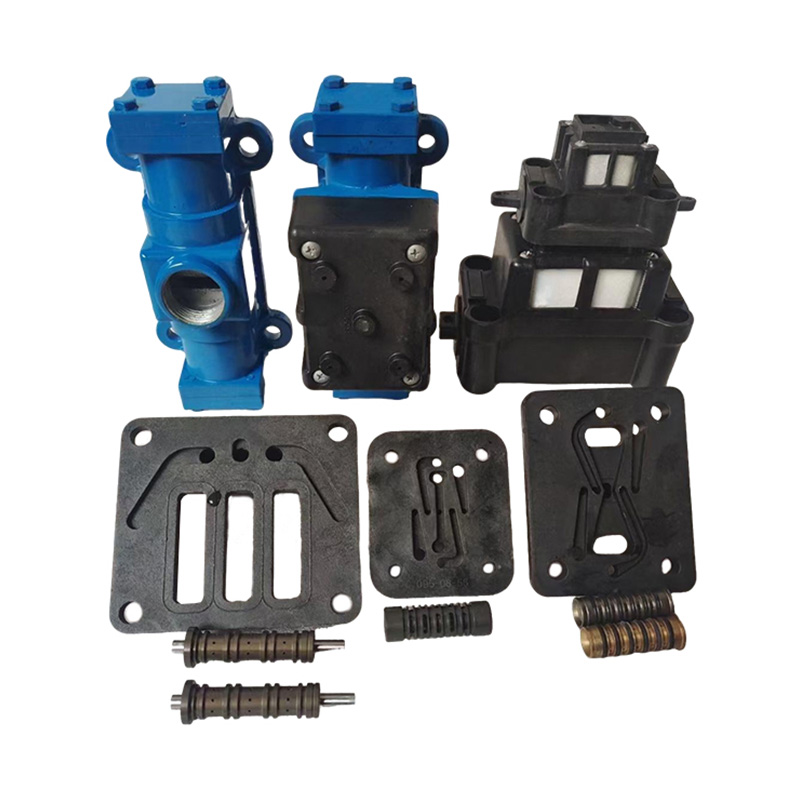
Valve systems operating under cyclic pressure conditions often place repeated mechanical demand on internal components. Over time, factors such as flow fluctuation, sealing interface friction, and micro-vibration within assemblies can influence the stability of cast parts.
Diaphragm Pump Castings used in these environments are typically exposed to alternating pressure loads, which makes surface integrity and internal cavity consistency important considerations. When paired within broader mechanical assemblies, Automotive Aluminum Parts often serve as supporting housings or structural connectors that maintain alignment between pumping modules and valve units.
Common challenges observed in valve-related systems include:
These factors do not occur in isolation; instead, they interact within assembled systems, influencing long-term operational stability.
Recent adjustments in production processes for Diaphragm Pump Castings focus on refining internal cavity geometry and improving consistency in wall thickness distribution. Instead of relying solely on post-processing adjustments, more attention is placed on controlling the casting stage itself.
Automotive Aluminum Parts production has also seen parallel adjustments, particularly in mold design alignment and surface preparation processes. When these two component categories are used together in valve-related systems, compatibility between structural frames and pump housings becomes a key design consideration.
Key process changes include:
A simplified overview of relevant characteristics:
Component Type Structural Focus Functional Role Valve System Interaction
Diaphragm Pump Castings Internal cavity precision Fluid displacement control Direct contact with flow regulation components
Automotive Aluminum Parts External structural support Housing and alignment stability Supports pump and valve positioning
These characteristics highlight how both components function within the same mechanical environment while serving different roles.
In valve-driven assemblies, Diaphragm Pump Castings are typically positioned as the core element responsible for fluid movement regulation. Their internal diaphragm structure allows controlled displacement under pressure variations, which is essential in systems requiring repeatable flow behavior.
Automotive Aluminum Parts, while not directly involved in fluid transfer, provide structural support for mounting, alignment, and vibration distribution. In combined assemblies, they help maintain positioning accuracy between valve bodies and pump chambers.
Typical application areas include:
Within these systems, interaction between structural parts and cast pump components determines how consistently pressure and flow are managed across repeated cycles.
Manufacturing feedback from valve-related assemblies shows that adjustments in casting geometry can influence wear patterns over extended usage cycles. While values differ depending on system design, the following generalized observations reflect common trends:
|
Observation Parameter |
Earlier Casting Structure |
Adjusted Casting Structure |
|
Surface wear distribution |
Concentrated at sealing edges |
More evenly distributed across contact zones |
|
Dimensional shift tendency |
Noticeable after repeated cycles |
Reduced variation across cycles |
|
Assembly alignment stability |
Dependent on post-machining |
Improved during initial assembly |
|
Housing compatibility |
Requires adjustment in fitting |
More consistent integration with aluminum parts |
These observations are based on comparative system testing in valve-based assemblies where both Diaphragm Pump Castings and Automotive Aluminum Parts are used together.
When both component types are integrated into a single valve system, design coordination becomes an important factor. Diaphragm Pump Castings determine how fluid moves through the system, while Automotive Aluminum Parts define how that system is supported mechanically.
Instead of treating these components independently, modern assembly design often considers:
This integrated approach allows system designers to reduce mismatch between fluid handling and structural support functions without changing the core operating principle of each component.
They regulate fluid movement through controlled diaphragm displacement, helping manage pressure variation within the system.
They provide structural support and alignment for pump and valve assemblies, ensuring components remain correctly positioned during operation.
Surface contact behavior, pressure cycling, alignment accuracy, and internal casting consistency all influence long-term performance.
Not always, but they are frequently combined in systems where both structural support and fluid control are required.
Adjustments in mold design, cooling control, and material flow management during casting contribute to more consistent component structure.
Yes, they are also applied in industrial fluid systems, agricultural equipment, and hydraulic regulation devices.
Copyright © Zhejiang Xiafeng Precision Die Casting Co., Ltd.
China Air Operated Double Diaphragm Pump
