 English
 русский
Industry News
Home / News / Industry News / Automotive Aluminum Parts Introduces Lightweight Structural Component Solutions

2026-05-22
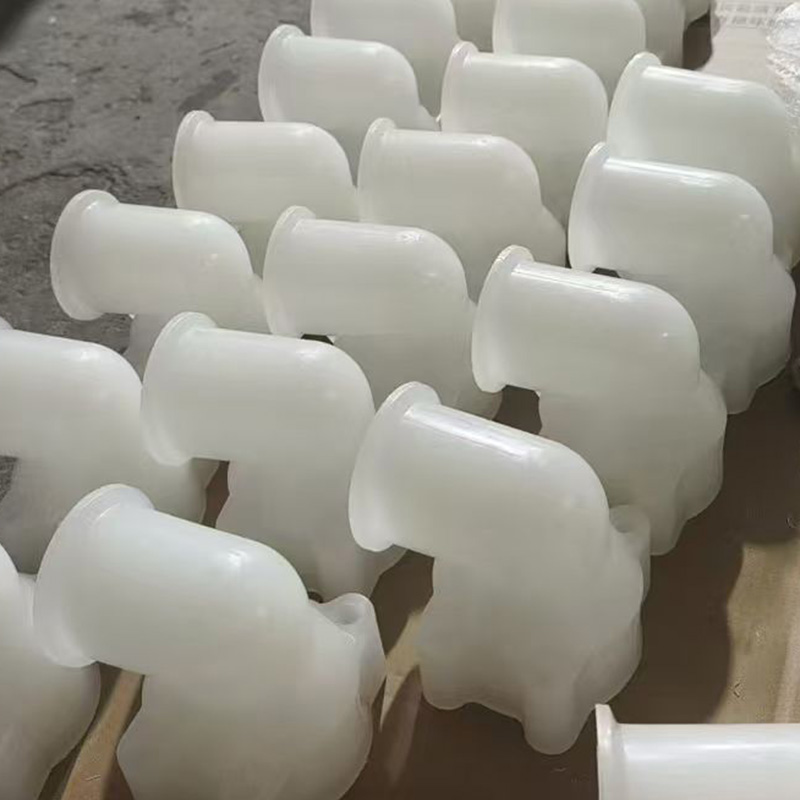
Diaphragm Pump Castings and Automotive Aluminum Parts are increasingly being discussed together in manufacturing contexts where fluid control systems and structural lightweighting requirements intersect. As industrial equipment and automotive structures continue to evolve, these two product categories are often designed with shared considerations around material stability, processing accuracy, and long-term assembly compatibility.
Across mechanical equipment and vehicle manufacturing, there has been a steady shift toward components that maintain structural integrity while reducing overall mass. This trend is not driven by a single factor but by a combination of assembly efficiency, energy usage patterns, and design flexibility requirements.
Automotive Aluminum Parts are commonly used in structural housings, brackets, and supporting frames due to their machining adaptability and consistent material behavior during forming and casting processes. At the same time, Diaphragm Pump Castings serve in fluid transfer and pressure regulation systems where internal flow stability and sealing structure accuracy are necessary. Although these two product types serve different end applications, they often rely on similar casting control methods and alloy selection principles.
Manufacturers face several recurring considerations:
These factors influence both Automotive Aluminum Parts design and Diaphragm Pump Castings production planning, especially in systems where components must operate in coordinated assemblies.
Recent adjustments in production approaches focus on refining casting consistency and reducing variability between batches. For Automotive Aluminum Parts, this often involves controlled mold temperature regulation and improved gating design to manage alloy flow behavior. For Diaphragm Pump Castings, similar attention is given to internal cavity formation and wall thickness distribution to support stable fluid movement under pressure.
Rather than treating each component category separately, some production lines now evaluate shared process parameters:
A simplified comparison of production characteristics can be illustrated as follows:
|
Component Type |
Primary Material Focus |
Key Process Consideration |
Common Application Requirement |
|
Automotive Aluminum Parts |
Aluminum alloys with structural stability |
Mold precision and surface finishing |
Load-bearing structural assemblies |
|
Diaphragm Pump Castings |
Aluminum or composite casting materials |
Internal cavity control and sealing accuracy |
Fluid transfer and pressure regulation systems |
These adjustments reflect a broader movement toward integrating production logic rather than isolating manufacturing steps by product category.
Automotive Aluminum Parts are widely used in vehicle chassis structures, engine support frameworks, and transmission housing assemblies. Their role is not limited to reducing weight; they also provide consistent machining behavior that supports modular design approaches. In some vehicle systems, these parts are paired with cast components that regulate fluid or air movement, including Diaphragm Pump Castings used in auxiliary systems such as braking assistance or emission-related fluid control.
Diaphragm Pump Castings themselves are also applied in industrial machinery beyond automotive environments. These include chemical dosing systems, agricultural spraying equipment, and compact pumping units where controlled displacement is required. The casting structure allows internal diaphragms to operate with predictable movement paths while maintaining separation between different fluid chambers.
In combined system designs, both product types may appear within a single mechanical assembly. For example, an automotive fluid management module might include aluminum structural housing elements alongside diaphragm-based pumping mechanisms, requiring precise alignment between cast and machined parts.
Production monitoring data from typical casting workflows highlights differences in dimensional tolerance ranges and surface treatment requirements. While values vary depending on design specifications, the following generalized overview reflects common production targets:
|
Parameter |
Automotive Aluminum Parts |
Diaphragm Pump Castings |
|
Dimensional tolerance range |
Narrow tolerance for structural fit |
Moderate tolerance with internal flow focus |
|
Surface treatment |
Anodizing or coating preparation |
Seal-compatible surface finishing |
|
Wall thickness control |
Uniform structural distribution |
Variable thickness for pressure handling |
|
Post-processing |
CNC machining integration |
Sealing surface refinement |
These parameters are adjusted during production planning stages rather than after final casting, which helps reduce rework cycles and improves consistency across production batches.
The relationship between Automotive Aluminum Parts and Diaphragm Pump Castings reflects a wider manufacturing trend where structural components and functional fluid systems are designed with shared engineering principles. Instead of treating casting as a purely shaping process, it is increasingly viewed as part of a broader system integration workflow.
This approach supports several practical outcomes:
As manufacturing requirements continue to evolve, attention is shifting toward how different casting categories can share process logic without compromising their specific functional roles. This is particularly relevant in industries where compact design and multi-function integration are becoming more common.
They may share casting principles such as mold design and alloy control, but internal structure requirements and finishing processes differ depending on application.
Aluminum offers a balance of machinability, structural consistency, and compatibility with various surface treatments, making it suitable for automotive structural applications.
Internal cavity design, wall thickness consistency, and surface sealing conditions are key factors affecting operational stability.
Yes, in some mechanical assemblies, aluminum structural parts and diaphragm pump systems are combined to support both structural and fluid functions.
Accuracy is managed through mold design control, process monitoring, and post-casting machining where required.
Copyright © Zhejiang Xiafeng Precision Die Casting Co., Ltd.
China Air Operated Double Diaphragm Pump
