 English
 русский
Industry News
Home / News / Industry News / How Aluminum Alloy Diaphragm Pump Casting Supports Lightweight Design?

2026-02-27
Reducing equipment weight has become a practical concern in many industrial fluid handling and material transfer systems. This trend is visible not only in pump selection but also in the associated flow control components installed along the pipeline. When Aluminum Alloy Diaphragm Pump Casting is applied in pneumatic double-diaphragm pumps and a Dust butterfly valve is used for particulate or airflow control, lightweight design is no longer an abstract concept but a functional requirement tied to installation, operation, and maintenance. Understanding how aluminum alloy pump castings contribute to reduced weight helps engineers evaluate system layout choices more realistically.
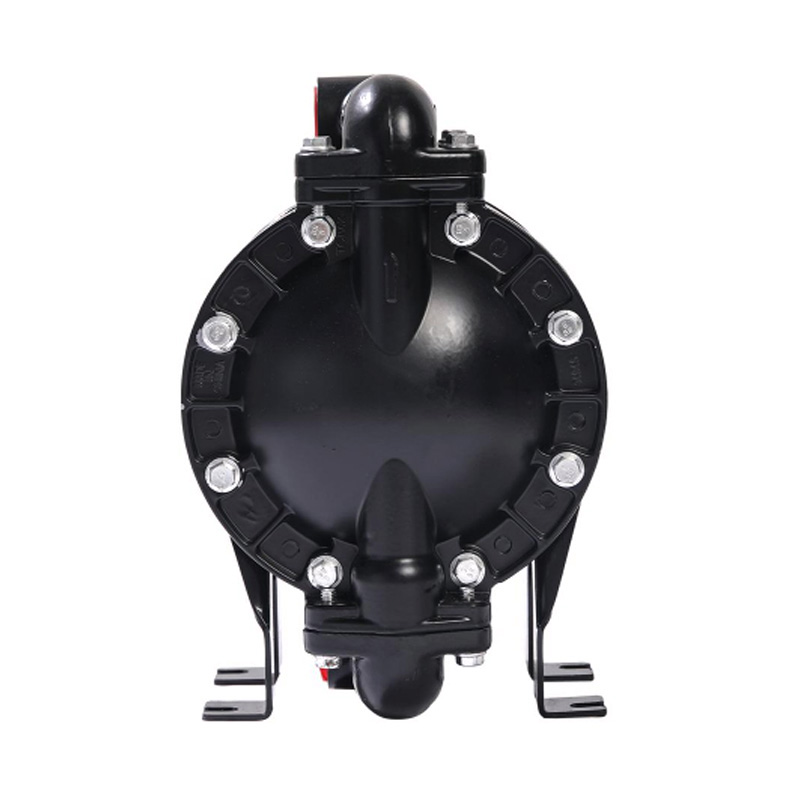
In industrial environments, pumps are rarely installed as standalone units. They are connected to pipelines, valves, supports, and automation devices. Equipment weight directly affects structural load, mounting methods, and accessibility for servicing. Lightweight design reduces stress on pipe flanges, support frames, and foundations, especially in elevated or mobile installations.
Aluminum alloy diaphragm pumps are often selected in systems where frequent relocation, modular layouts, or space limitations exist. Their casting material plays a central role in this suitability. When combined with components such as dust butterfly valves, which also emphasize compact structure, the overall system becomes easier to integrate without extensive reinforcement.
Aluminum alloy is widely used in industrial equipment due to its balanced mechanical characteristics. Compared with cast iron or steel, aluminum alloy offers lower density while maintaining sufficient structural strength for many pressure-rated applications. This high strength-to-weight ratio is particularly relevant in diaphragm pump casings, where the body must withstand internal air pressure and fluid forces without excessive mass.
Casting aluminum alloy into pump housings allows for complex geometries that support internal flow paths and diaphragm chambers while keeping wall thickness controlled. Surface treatments such as anodizing or epoxy coating further enhance corrosion resistance, making the material suitable for handling a range of fluids without relying on heavy protective layers.
By using aluminum alloy casting instead of heavier metals, overall pump weight is reduced significantly. This reduction simplifies transportation, lifting, and installation, particularly in locations where mechanical handling equipment is limited.
For maintenance teams, lighter pump bodies are easier to disassemble and reassemble during diaphragm replacement or inspection. In systems where pumps are mounted on skids or frames shared with valves and piping, reduced pump weight also lowers the load transmitted to adjacent components such as dust butterfly valves and pipeline joints.
Lightweight design is not achieved through material choice alone. The casting process enables precise control over wall thickness, rib placement, and internal reinforcement. Aluminum Alloy Diaphragm Pump Casting allows engineers to place material only where structural support is required, avoiding unnecessary mass.
This approach supports a compact pump profile while maintaining pressure integrity. The absence of rotating shafts and seals further simplifies the housing structure, as fewer mechanical interfaces are needed. As a result, the pump body can remain lightweight without compromising functional requirements related to air distribution and diaphragm movement.
Aluminum alloy diaphragm pumps are driven by compressed air, and their performance is adjusted by regulating air supply. The lightweight pump body responds well to pneumatic actuation, as reduced mass places less demand on mounting stability during operation. Vibrations transmitted through the system are easier to manage when equipment weight is controlled.
In pneumatic conveying or fluid transfer lines where dust butterfly valves regulate airflow or isolate sections, balanced component weight contributes to stable system behavior. Excessive weight at one point in the line can create uneven stress distribution, while lighter components support more uniform loading across supports and brackets.
From a safety perspective, lighter equipment reduces risks during manual handling and installation. Aluminum alloy pump castings lower the likelihood of injury when positioning pumps in confined spaces or elevated platforms. This is particularly relevant in chemical plants, mining facilities, or mobile processing units where access conditions vary.
When pumps handle toxic, volatile, or corrosive fluids, as is common with diaphragm pump applications, safer handling during installation and maintenance becomes even more important. Lightweight housings allow quicker isolation and removal when system adjustments are required, reducing exposure time for personnel.
Copyright © Zhejiang Xiafeng Precision Die Casting Co., Ltd.
China Air Operated Double Diaphragm Pump
