 English
 русский
Industry News

When To Choose Dust Butterfly Valve For Particulate Pipelines?
2026-02-20
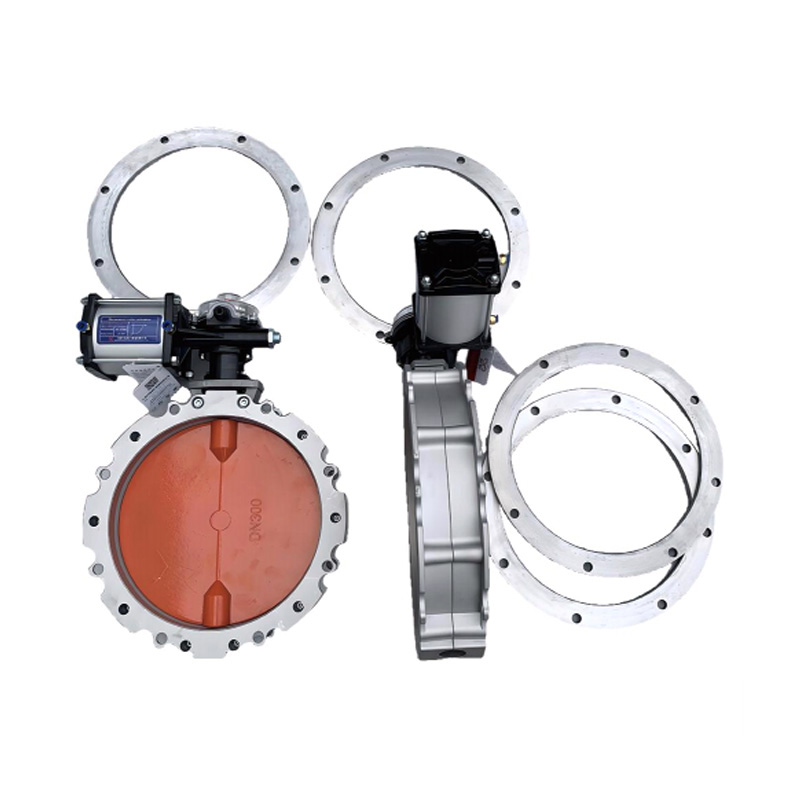
Designing particulate pipeline systems often involves balancing material behavior, equipment compatibility, and operational control. When Aluminum Alloy Diaphragm Pump Casting components are part of material transfer equipment and a Dust butterfly valve is considered for pipeline control, the timing and conditions for selecting this type of valve become practical engineering questions. Rather than being a default option, dust butterfly valves are chosen based on specific conveying conditions, material properties, and system requirements that influence long-term operation and maintenance.
Characteristics of Particulate Pipeline Systems
Particulate pipelines are used to transport powders, granules, or solid particles through enclosed systems. These pipelines may operate under pneumatic conveying, gravity flow, or hybrid conditions. Compared with liquid pipelines, particulate systems face additional challenges such as particle settling, abrasion, and dust accumulation.
Flow behavior in these systems is influenced by air velocity, particle size distribution, moisture content, and pipeline orientation. Valves installed in such pipelines must accommodate both the carrier gas and solid particles without creating excessive blockage or uneven wear. Understanding these system characteristics helps determine when a dust butterfly valve is an appropriate choice.
Situations Requiring Compact Flow Control
Dust butterfly valves are often selected when compact installation space is required. Their short face-to-face dimension allows them to fit into pipelines where axial space is limited, such as near equipment connections or branching points. In particulate pipelines with complex routing, this compact structure supports flexible layout design.
When system designers need a valve that can be installed without major pipeline modifications, a butterfly valve provides a practical solution. This is especially relevant in retrofit projects or expansions of existing conveying lines, where space constraints influence component selection.
Handling Media with Solid Particles
A key reason to choose a dust butterfly valve is its suitability for media containing solid particles. The rotating disc design allows material to pass through with obstruction when the valve is open. Compared with some linear valve types, the butterfly valve presents fewer cavities where particles can accumulate.
This design becomes relevant when handling powders or granules that are free-flowing and relatively uniform. In pipelines where material flow must be started and stopped regularly, the valve’s quarter-turn operation supports straightforward control without complex mechanical movement.
Matching Valve Design to Material Properties
Material characteristics play a significant role in determining when a dust butterfly valve should be selected. Fine powders behave differently from coarse particles, and both differ from mixtures containing moisture. Fine dust may infiltrate sealing areas, while coarse particles exert more mechanical force during valve operation.
Dust butterfly valves with appropriate sealing structures are commonly chosen when material abrasiveness and temperature remain within defined ranges. Soft sealing designs are often used when tighter isolation is required at moderate pressures, while hard sealing designs are selected for higher temperature or more abrasive conditions. Evaluating these factors helps align valve selection with real material behavior rather than theoretical assumptions.
Pressure and Operating Conditions
Particulate pipelines often operate within specific pressure ranges, especially in pneumatic conveying systems. Dust butterfly valves are typically designed for nominal pressures between PN1.0 and PN1.6 MPa, which suits many industrial conveying applications.
Choosing this type of valve makes sense when system pressure remains stable and within the valve’s rated range. In systems with frequent pressure fluctuations, attention must be paid to actuator selection and sealing design to ensure consistent performance. The valve’s role is to control or isolate flow, not to absorb pressure surges beyond its design scope.
Integration with Pneumatic Actuation
Dust butterfly valves are commonly paired with pneumatic actuators, making them suitable for automated particulate pipelines. When remote operation, interlocking, or basic regulation is required, pneumatic actuation supports coordinated control with other system components.
This becomes relevant in facilities where material flow must align with production sequences or safety requirements. The valve’s response time and control interface can be matched with system logic to manage material transfer without manual intervention. In such cases, choosing a dust butterfly valve supports integration with existing pneumatic control infrastructure.
Coordination with Pumping Equipment
In some particulate handling systems, diaphragm pumps are used for material transfer, slurry movement, or feeding stages before pneumatic conveying. Aluminum Alloy Diaphragm Pump Casting parts are often selected for these pumps due to their structural balance and manageable weight.
When pumps and valves operate in the same system, coordination between pumping cycles and valve positioning becomes important. A dust butterfly valve may be chosen to isolate the pump during maintenance, regulate discharge flow, or direct material to different pipeline sections. Material and structural compatibility between pump castings and valve bodies supports stable operation under shared temperature and pressure conditions.
CATEGORY
Message Feedback
Copyright © Zhejiang Xiafeng Precision Die Casting Co., Ltd.
China Air Operated Double Diaphragm Pump
