 English
 русский
Industry News

Diaphragm Pump Castings Expand Use In Industrial Automation Lines
2026-05-15
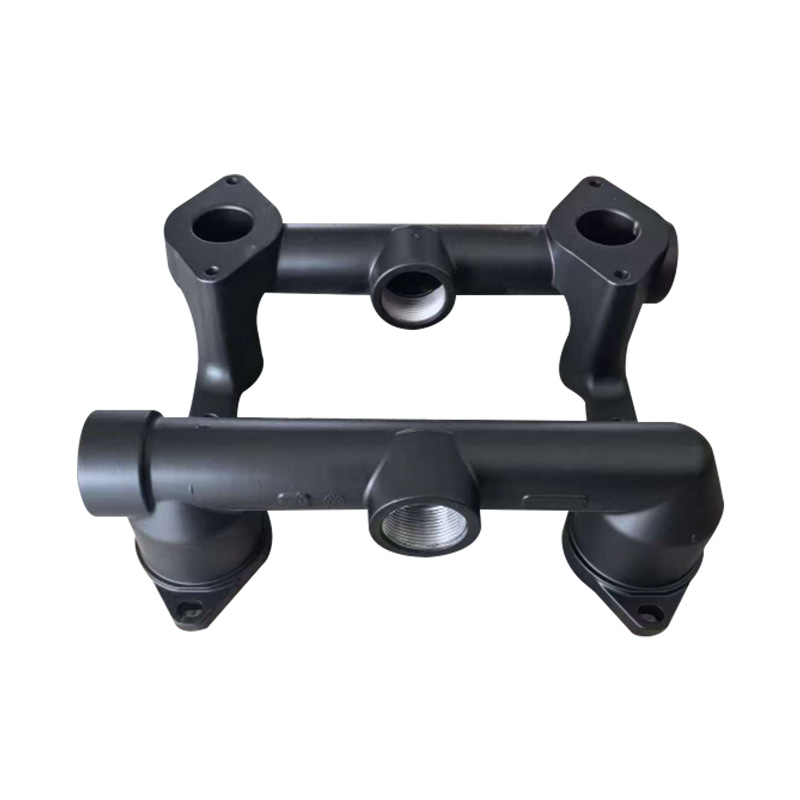
Diaphragm Pump Castings and Automotive Aluminum Parts are increasingly being applied within industrial automation lines where continuous material flow, controlled pressure systems, and compact mechanical design are required. As automation equipment becomes more integrated, these two casting categories are often produced under similar process frameworks, allowing more consistent dimensional control and smoother adaptation between fluid systems and mechanical structures.
Production Demands Behind Automation Integration
Industrial automation lines rely on stable mechanical behavior, especially in systems involving fluid transfer, dosing, and pneumatic control. Diaphragm pump castings play a central role in maintaining controlled fluid movement, while automotive aluminum parts often contribute to supporting structures, actuator housings, and frame assemblies within automated equipment.
A common challenge in these environments is maintaining consistency across long production cycles. Variations in casting density or surface finishing can affect pump chamber movement or alignment of aluminum housings in automated assemblies. This becomes more noticeable when equipment operates continuously, where small deviations accumulate into operational irregularities.
Another issue is compatibility between different component categories used in the same automation line. When diaphragm pump components and aluminum structural parts are sourced or produced separately, differences in material treatment can cause additional calibration work during system integration.
Adjustments in Casting Process and Structural Control
Recent developments in manufacturing approaches have focused on aligning diaphragm pump castings with automotive aluminum parts production under more unified process conditions. Rather than treating them as separate product lines, many casting systems now share melting control, mold temperature regulation, and cooling management.
Key process adjustments include:
- Controlled alloy composition to maintain consistent flow behavior during casting
- Stabilized mold temperature distribution for reduced thermal imbalance
- Adjusted gating design to support smoother cavity filling
- Pressure monitoring during injection or gravity casting stages
- Surface finishing processes aligned with assembly tolerance requirements
These adjustments support more stable output when switching between pump-related components and automotive aluminum structural parts within the same production environment. The focus is not only on final shape accuracy but also on how each material behaves during repeated thermal cycles.
Application in Industrial Automation Systems
Diaphragm pump castings are widely used in automated fluid handling systems, including chemical dosing units, lubrication circulation systems, and controlled liquid transfer modules. Their structure is designed to support repeated diaphragm motion while maintaining internal chamber consistency under variable pressure conditions.
Automotive aluminum parts are often integrated into automation machinery as support frames, protective housings, mounting brackets, and heat management structures. Their lightweight characteristics make them suitable for equipment where space and load balance are important considerations.
When both types of components are used within the same automation line, production compatibility becomes an important factor. Unified casting approaches help reduce variation in assembly interfaces, making integration between fluid modules and mechanical structures more consistent.
|
Category |
Diaphragm Pump Castings |
Automotive Aluminum Parts |
|
Primary Function |
Controlled fluid movement |
Structural and mechanical support |
|
Material Focus |
Pressure stability and sealing |
Load distribution and rigidity |
|
Casting Sensitivity |
High sensitivity to chamber shape |
Moderate sensitivity to structure |
|
Surface Requirement |
Smooth internal flow channels |
Machining for assembly precision |
|
Automation Use Role |
Fluid control modules |
Equipment frames and housings |
This comparison highlights how both categories share aluminum-based manufacturing processes while serving different functional roles within automation systems.
Production Observations and Operational Data
In combined manufacturing environments, diaphragm pump castings and automotive aluminum parts often share inspection and quality tracking systems. This allows production teams to compare dimensional stability across different product categories using the same measurement standards.
One commonly observed pattern is the improvement in batch consistency when melting furnaces are dedicated to controlled alloy groups rather than frequently switching material compositions. This helps maintain more stable casting behavior across both pump and automotive components.
Another observation is related to assembly alignment in automation systems. When both product types are produced under unified tolerance control, adjustment time during system installation can be reduced, particularly in modular automation lines where fluid and mechanical sections are closely connected.
A simplified data reference from shared production lines:
|
Indicator |
Shared Production Line Observation |
|
Mold change frequency |
Reduced when product geometry is standardized |
|
Dimensional deviation range |
More stable under unified cooling control |
|
Inspection consistency |
Improved through shared measurement systems |
|
Material utilization |
More even across mixed production cycles |
These figures reflect operational trends rather than fixed benchmarks, depending on facility configuration and equipment setup.
Industry Role in Automation Development
The connection between diaphragm pump castings and automotive aluminum parts reflects a broader shift in how industrial automation equipment is designed and manufactured. Instead of isolating fluid systems from structural components, production planning increasingly considers them within the same engineering framework.
This approach supports more modular automation design, where pump units, control modules, and structural frames are assembled as interconnected systems rather than independent sections. As a result, casting production becomes more focused on interface compatibility and long-term dimensional stability rather than single-component optimization.
It also encourages closer coordination between mechanical design and casting engineering. Adjustments in pump housing geometry can influence aluminum bracket design, while changes in structural frames may affect fluid routing within automation systems.
CATEGORY
Message Feedback
Copyright © Zhejiang Xiafeng Precision Die Casting Co., Ltd.
China Air Operated Double Diaphragm Pump
