 English
 русский
Industry News
Home / News / Industry News / Diaphragm Pump Castings: Automotive Aluminum Parts Manufacturing Expands Precision Control

2026-05-08
Diaphragm Pump Castings and Automotive Aluminum Parts are increasingly produced within shared precision manufacturing systems, as industries look for more stable casting quality and tighter dimensional control across fluid handling and automotive components. This integration is influencing how metal forming processes are structured, especially where consistent pressure performance and lightweight structural requirements need to be maintained in the same production environment.
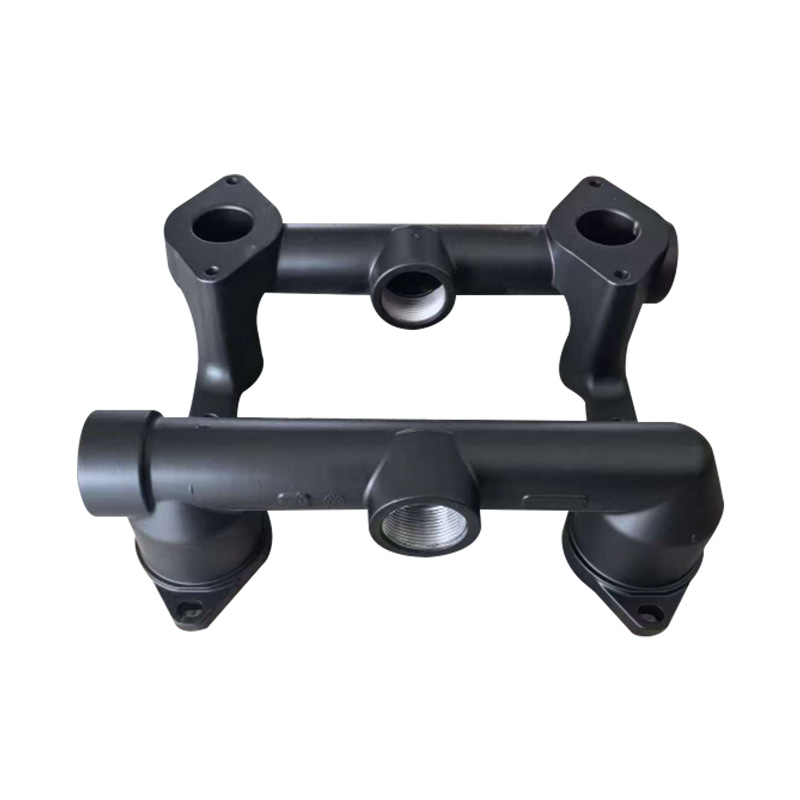
Modern casting production for both diaphragm pump components and automotive aluminum structures is influenced by stricter requirements on tolerance control, surface consistency, and material stability. Diaphragm pump castings often operate in fluid transfer systems where sealing integrity and fatigue resistance are critical, while automotive aluminum parts are expected to meet structural load requirements while remaining lightweight.
A key challenge in production is the variation caused by thermal expansion during aluminum forming and cooling cycles. Even minor deviations can affect pump diaphragm movement or automotive assembly alignment. This has led to adjustments in mold design, gating systems, and cooling channel layout to stabilize material flow.
Another factor is production efficiency alignment. Many factories are shifting toward shared casting lines where diaphragm pump components and automotive parts are processed under similar temperature control systems, reducing variation between batches while maintaining flexibility in output.
Recent improvements in diaphragm pump castings and automotive aluminum parts production focus on refining mold accuracy and controlling alloy behavior during solidification. Instead of relying on single-stage casting, manufacturers increasingly apply multi-stage cooling and controlled pressure filling.
Key operational adjustments include:
These adjustments do not change the fundamental production method but refine how materials behave under repeated cycles, especially when switching between pump housing structures and automotive brackets or housings on the same line.
Diaphragm pump castings are commonly used in fluid transfer systems, including chemical dosing equipment, agricultural spraying systems, and industrial liquid circulation units. Their role depends heavily on maintaining internal chamber consistency to ensure smooth diaphragm movement and reduce wear during continuous operation.
Automotive aluminum parts, on the other hand, are applied in engine housings, transmission support structures, heat dissipation components, and chassis reinforcement sections. The demand for reduced weight without compromising structural integrity makes aluminum a preferred material in many vehicle subsystems.
A shared manufacturing approach allows both product categories to benefit from consistent aluminum processing conditions. This is particularly useful when production schedules require flexible switching between pump components and automotive parts without significant recalibration of equipment.
|
Production Factor |
Diaphragm Pump Castings |
Automotive Aluminum Parts |
|
Primary Function |
Fluid control and sealing stability |
Structural support and housing |
|
Material Focus |
Fatigue resistance under pressure |
Strength-to-weight balance |
|
Casting Sensitivity |
High sensitivity to sealing accuracy |
Medium sensitivity to load points |
|
Cooling Requirement |
Uniform cooling for chamber integrity |
Controlled cooling for strength |
|
Post-processing Need |
Surface finishing for sealing areas |
Machining for assembly fit |
This comparison shows that while both categories share aluminum-based forming processes, the functional expectations influence how each component is refined after casting.
In combined production environments, shared casting systems have shown measurable changes in workflow stability. One observed pattern is the reduction of mold change downtime when switching between diaphragm pump and automotive part batches, especially when both products are designed with similar wall thickness ranges.
Another operational observation is improved material utilization consistency. Aluminum melt batches used across both product categories tend to show more stable composition tracking when centralized melting furnaces are used, reducing variability between production cycles.
Some facilities report that defect rates related to porosity or uneven shrinkage can be more effectively monitored when both product types are processed under unified inspection systems. This allows quality tracking data to be compared across different component categories rather than isolated product lines.
The overlap between diaphragm pump castings and automotive aluminum parts manufacturing reflects a wider trend toward shared precision engineering platforms. Instead of treating industrial fluid systems and automotive components as separate production domains, manufacturers are increasingly aligning their processes around material behavior rather than final application.
This shift encourages more standardized control of aluminum casting parameters such as temperature curves, mold pressure consistency, and cooling cycle timing. It also supports more flexible factory layouts where production lines can be adjusted based on demand without requiring complete equipment reconfiguration.
At the same time, it places more emphasis on process monitoring rather than post-production correction. As a result, inspection systems and real-time data tracking are becoming more integrated into casting environments, particularly where both diaphragm pump and automotive parts are produced together.
Both rely on controlled aluminum casting processes, and shared systems help maintain consistent temperature, pressure, and material behavior across different component types.
Aluminum alloys are commonly used due to their balance of weight, strength, and thermal conductivity, suitable for both fluid systems and vehicle components.
Casting quality influences sealing surfaces, internal chamber smoothness, and overall resistance to pressure changes during operation.
Not usually. However, similar mold technologies and cooling systems can be applied, with different geometries designed for each application.
Porosity, shrinkage inconsistency, surface roughness, and dimensional deviation are key factors tracked during inspection.
Yes, when equipment is designed with modular tooling and standardized casting parameters, switching between product types becomes more manageable.
Copyright © Zhejiang Xiafeng Precision Die Casting Co., Ltd.
China Air Operated Double Diaphragm Pump
