 English
 русский
Industry News

How To Select Dust Butterfly Valve Sealing Types?
2026-02-06
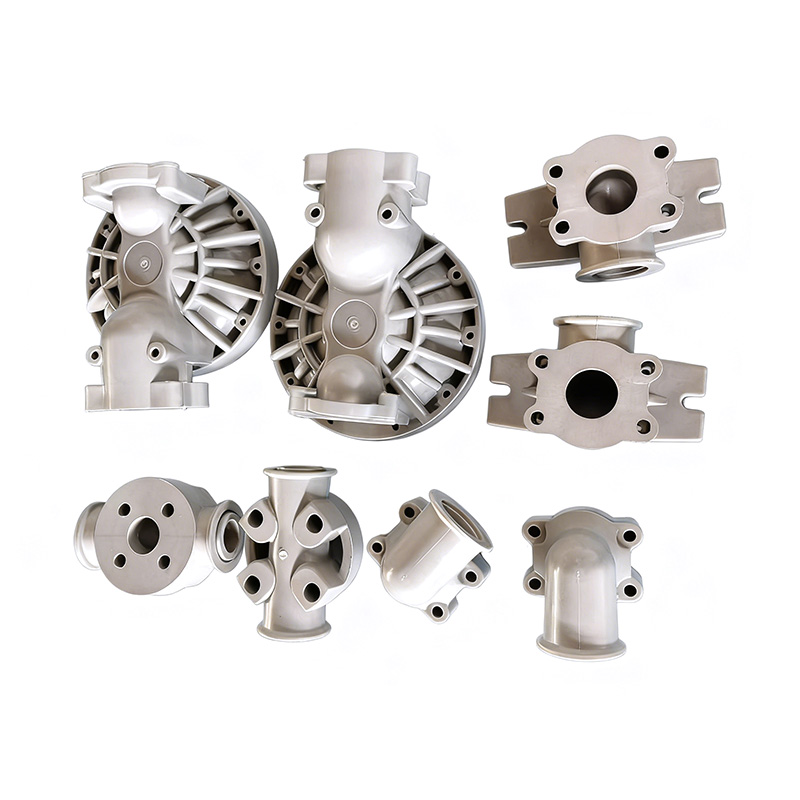
Handling powders and particulate media in industrial pipeline systems often requires careful consideration of both flow control components and supporting casting parts. When Aluminum Alloy Diaphragm Pump Casting components are used alongside Dust butterfly valve assemblies in conveying or processing lines, sealing selection becomes a practical issue rather than a purely theoretical one. Different sealing structures respond differently to dust concentration, pressure fluctuation, and material characteristics, and understanding these differences helps engineers and operators make choices that fit real operating conditions instead of relying on generic recommendations.
Understanding the Working Environment of Dust Butterfly Valves
Dust butterfly valves are commonly installed in systems where solid particles are transported by air or gravity. Typical applications include coal chemical processing, mining operations, powder conveying lines, and pharmaceutical production. In these environments, the valve is exposed not only to pressure and flow changes but also to continuous contact with fine or coarse particles.
Before selecting a sealing type, it is important to evaluate the media characteristics. Particle size distribution, abrasiveness, moisture content, and temperature range all influence how a seal behaves over time. In high-dust conditions, fine particles can enter sealing gaps, while coarse particles may exert mechanical stress on the sealing surface during valve rotation. These factors directly affect leakage control and service life.
Soft Sealing Structures and Their Practical Use
Soft sealing dust butterfly valves typically use elastomer or polymer-based materials for the sealing surface. These materials can deform slightly under contact pressure, allowing the seal to adapt to minor surface irregularities between the valve disc and the body. This characteristic is often valued in applications where tighter shut-off is required at lower pressures.
In powder conveying systems with relatively fine and dry materials, soft seals can provide stable isolation during shut-off operations. The flexible nature of the seal helps compensate for small particles trapped at the sealing interface. However, material compatibility should be carefully assessed. Some powders may contain chemical components or additives that affect elastomer aging, while higher operating temperatures may also limit the range of usable soft sealing materials.
From a maintenance perspective, soft seals may require periodic inspection, especially in systems with frequent valve cycling. Continuous abrasion from particles can gradually alter the sealing surface, which may affect shut-off performance over time.
Hard Sealing Designs in Dust-Heavy Conditions
Hard sealing dust butterfly valves use metal or composite sealing surfaces that rely on precise machining and controlled contact pressure. Compared with soft seals, hard seals generally tolerate higher temperatures and can handle more abrasive media without significant deformation.
In applications such as mining or coal processing, where particles are larger or more angular, hard sealing designs are often considered due to their resistance to mechanical wear. The sealing performance depends heavily on alignment and surface finish, as there is less material flexibility to accommodate foreign particles.
While hard seals may not achieve the same leakage control at very low pressures as soft seals, they can provide consistent performance in systems where pressure, temperature, or particle hardness exceed the limits of elastomer-based seals. Proper installation and actuator torque adjustment are especially important to ensure stable sealing behavior.
The Role of Valve Structure and Materials
The structural design of a dust butterfly valve also influences sealing selection. Top-mounted valve structures, which reduce the number of body connection bolts, contribute to mechanical stability and consistent disc alignment. Stable alignment supports even contact between the disc and seal, regardless of whether a soft or hard sealing type is used.
Material selection for the valve body and disc further affects sealing performance. Aluminum alloy valve bodies are commonly used for their balance of strength and weight, making them suitable for pipeline systems where structural load is a concern. Polymer discs, often paired with aluminum bodies, reduce friction during rotation and help limit wear on sealing surfaces.
When Aluminum Alloy Diaphragm Pump Casting components are part of the same system, material consistency becomes relevant. Similar thermal expansion characteristics and corrosion behavior between pump castings and valve bodies can contribute to stable long-term operation, especially in automated conveying lines.
Pressure and Control Requirements
Nominal pressure ratings, typically ranging from PN1.0 to PN1.6 MPa for dust butterfly valves, also influence sealing decisions. Soft seals are generally well-suited for lower to medium pressure ranges, where controlled compression can maintain effective isolation. Hard seals are more often applied when pressure fluctuations or temperature variations are expected.
The drive mode should also be considered. Pneumatic quarter-turn actuators are widely used due to their suitability for on/off control and basic regulating functions. Actuator output torque must match the sealing resistance of the selected valve. Hard sealing designs often require higher torque during closing, which should be accounted for during actuator selection to avoid incomplete sealing or excessive mechanical stress.
CATEGORY
Message Feedback
Copyright © Zhejiang Xiafeng Precision Die Casting Co., Ltd.
China Air Operated Double Diaphragm Pump
