 English
 русский
Industry News

Where Dust Butterfly Valve Fits In Pneumatic Conveying Lines?
2026-02-13
Pneumatic conveying systems are widely used to transport powders and granular materials through pipelines using air or gas as the driving force. Within these systems, multiple mechanical components must work together to keep material flow stable and controllable. When Aluminum Alloy Diaphragm Pump Casting parts are used in material handling equipment and a Dust butterfly valve is installed along the pipeline, their functional positions and interaction become important considerations during system design. Understanding where the dust butterfly valve fits within pneumatic conveying lines helps engineers select suitable layouts, control methods, and maintenance strategies based on real operating conditions rather than assumptions.
Basic Structure of Pneumatic Conveying Lines
A typical pneumatic conveying line consists of a material feeding unit, air supply equipment, pipelines, control valves, and receiving units such as silos or separators. Depending on the conveying method, systems may operate under positive pressure, negative pressure, or a combination of both. Each configuration places different demands on flow control components.
Within this structure, valves are not simply shut-off devices. They are used to guide material direction, isolate sections for maintenance, and coordinate material transfer between process stages. The dust butterfly valve is often selected for these roles due to its compact structure and suitability for particulate media.
Functional Position of Dust Butterfly Valves
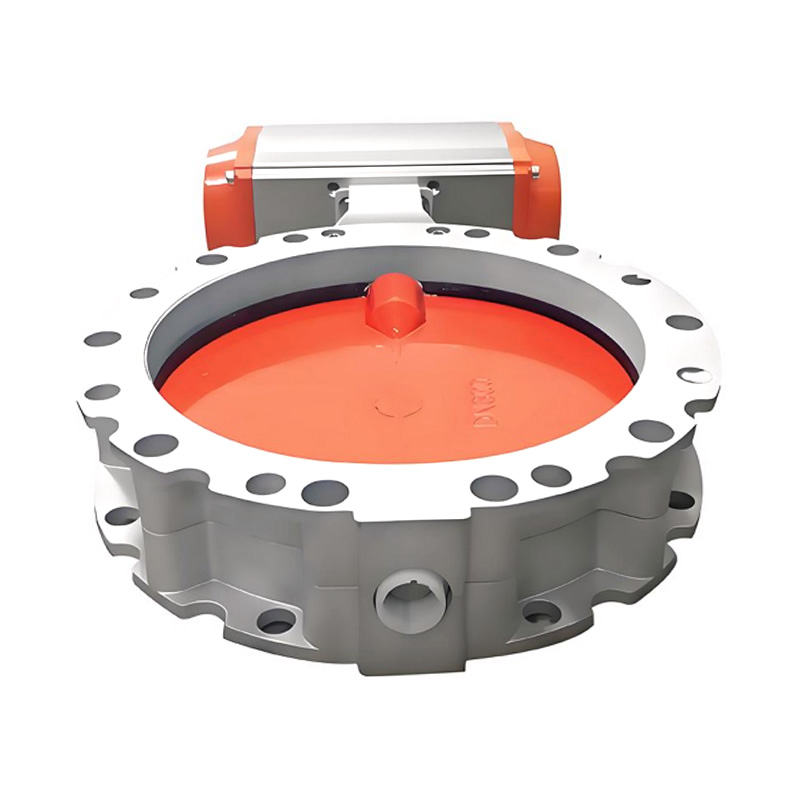
Dust butterfly valves are commonly installed at branching points, discharge outlets, or isolation sections of pneumatic conveying lines. Their quarter-turn operation allows for quick opening and closing, which supports process control where timing and synchronization are required. Unlike some linear valves, butterfly valves occupy less axial space, making them easier to integrate into existing pipe layouts.
In systems handling powders or fine granules, the valve disc rotates within the pipeline, controlling the passage of material and conveying air. The sealing structure and disc material influence how the valve performs under continuous exposure to dust-laden flow. Proper positioning helps reduce material buildup around the valve seat and supports consistent operation.
Role in Material Diversion and Isolation
One of the primary roles of a dust butterfly valve in pneumatic conveying lines is material diversion. At junctions where material must be directed toward different destinations, the valve controls which branch receives the flow. This function is common in multi-silo storage systems or production lines that process different material grades.
Isolation is another key application. During equipment inspection or cleaning, sections of the conveying line need to be separated without allowing material leakage. A dust butterfly valve installed upstream or downstream of critical components provides this separation. Its ability to handle solid particles makes it suitable for such duties without requiring complex valve designs.
Interaction with Conveying Pressure and Flow
Pneumatic conveying relies on air pressure differences to move materials. Dust butterfly valves must operate under the system’s nominal pressure range, which typically falls between PN1.0 and PN1.6 MPa for many industrial applications. The valve’s position affects local pressure distribution, especially when partially open.
In dilute-phase conveying systems, where material concentration is relatively low, the valve mainly controls airflow with suspended particles. In dense-phase systems, material concentration is higher, and the valve experiences greater contact with solids. In both cases, correct valve placement helps maintain stable conveying conditions and avoids excessive pressure drop across the valve.
Relationship with Aluminum Alloy Diaphragm Pump Casting Components
In some pneumatic conveying setups, diaphragm pumps are used to assist with material feeding or transfer of slurry-like substances before drying or further processing. Aluminum Alloy Diaphragm Pump Casting parts are often chosen for their balance of strength and weight, supporting stable pump operation within the system.
When these pumps operate upstream or downstream of dust butterfly valves, coordination between pumping and valve control becomes important. The valve may regulate material discharge after pumping or isolate the pump during maintenance. Material compatibility between the pump casting and valve body helps maintain consistent behavior under temperature changes and pressure variations.
Material Characteristics and Valve Placement
The physical properties of conveyed materials influence where dust butterfly valves should be installed. Fine powders with low bulk density behave differently from coarse or irregular particles. Fine dust may accumulate at sealing interfaces if airflow velocity decreases near the valve, while heavier particles may exert more mechanical force on the disc during opening and closing.
Placing the valve in sections of the pipeline with relatively stable flow can reduce uneven wear. Vertical or inclined pipe sections may require different considerations compared to horizontal lines, as gravity affects how particles settle when the system stops. These factors guide decisions on whether the valve should be positioned closer to the feed point, near the discharge, or at intermediate control locations.
CATEGORY
Message Feedback
Copyright © Zhejiang Xiafeng Precision Die Casting Co., Ltd.
China Air Operated Double Diaphragm Pump
